

Tiles Matching
Andles Games crosses a stacked tile pile with a three-in-a-row clearing rule.

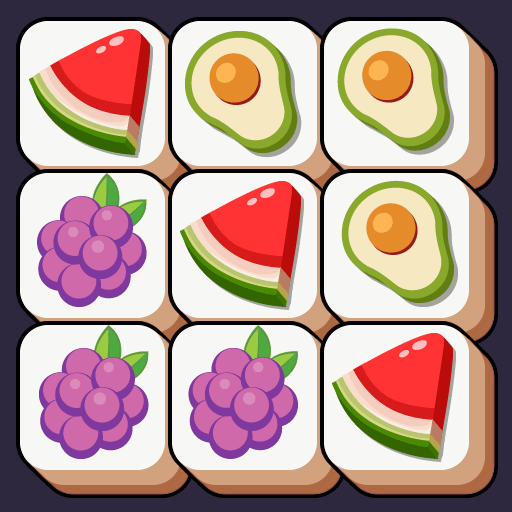
Andles Games describes Tiles Matching as a hybrid, and the label holds up on the board: the pile comes from one tradition and the clearing rule from another. The rest of them are gathered in the full Connect list.
The mahjong half of that description shapes the layout, while the three-in-a-row half is what empties it, which is why the board reads oddly to anyone arriving from a pure link game. Feed tags add jewels and sliding-puzzle alongside match3 and connection, so expect coloured gem art rather than suits and honours. The studio pitches the whole thing as a logic exercise for adults and children alike. The Cooking pile uses the matching rule on a differently drawn set.
Difficulty rises with each level, and Andles Games is candid that not everyone completes the game on a first attempt. At 800 by 600 the faces stay large enough for a shared screen, which suits that stated audience — this is one of the boards in the hub where a child and an adult can reasonably take turns on the same layout. Freeing the lower rows early matters in the Panda Classic pile as well.
Controls
Mouse, or tap on a touchscreen.
How to Play
- Look over the pile and pick out pieces carrying the same symbol.
- Clear them under the three-in-a-row rule the game borrows from match-3.
- Work down through the layers rather than skimming the easiest pieces first.
- Finish the level to move on, expecting the next one to be harder.
Tips & Tricks
- Plan before the top layer goes — Tiles Matching buries the third symbol of a set as readily as it reveals one.
- Treat it as two games — the pile behaves like a stacked tile board, the clearing rule behaves like match-3.
- Expect the climb — Andles Games states the difficulty rises with every level and few players finish first time.
- Good board to share — the studio aims it at adults and children, and 800 by 600 leaves the symbols readable from a step back.
Frequently Asked Questions
What two genres does Tiles Matching combine?
The developer names mahjong and three-in-a-row, so the pile stacks like one and clears like the other.
Is Tiles Matching difficult?
It gets harder each level, and Andles Games says not everyone completes it on a first attempt.
Who is Tiles Matching aimed at?
Adults and children both — the studio pitches it as a logic exercise rather than a speed test.
Who developed Tiles Matching?
Andles Games, at a board size of 800 by 600.


