

Eight tile games worth knowing on a desktop, chosen because each one is genuinely still playable and because each does something the others do not. No scores are invented here and no prices are quoted, since both change and neither is ours to state. What is described is what the board does when it loads and who it suits, and where a version of it exists in this catalogue, it is linked.
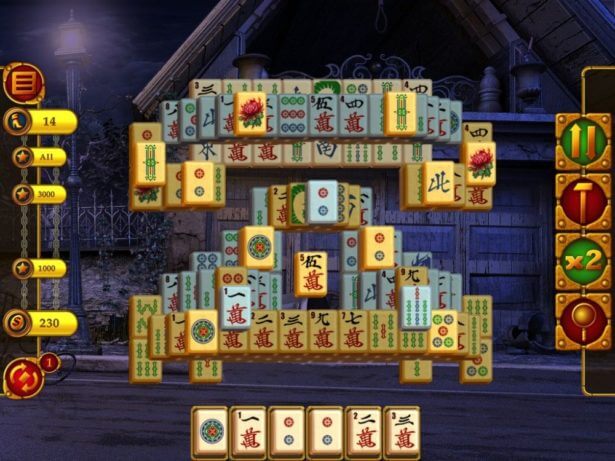
A desktop is the right machine for these. The pointer is precise where a fingertip is not, a full-size screen shows a four-layer stack without shrinking the faces to nothing, and full screen mode turns a browser window into something close to a dedicated tile program.
1. Shanghai, the one that started it
The stacked pairing puzzle became widely known through a commercial release in 1986, itself based on a program written for an educational computer system a few years earlier. It is widely credited as the reason the tiles are known outside Asia at all, and the turtle layout it used is still the default shape on nearly every board since.
Its descendants are everywhere, which makes the original mostly of historical interest now. What it fixed for good was the rule everyone still plays by: a tile is free when nothing sits on it and one long side is clear.
2. Mahjong Titans, the Windows built-in
For anyone who used Windows Vista or Windows 7, this was the tile game, sitting in the games folder with a choice of six layouts and no timer. Later Windows versions replaced it with a store title, which is why so many people go looking for it after upgrading a machine.
It is the cleanest possible version of the format: no theme, no bonuses, no clock. The Titans board here is the same idea in a browser, with the same unhurried structure and the same six-layout choice of shapes.
3. Kyodai, the desktop package that named a genre
A long-running Windows shareware program built a serious following in the late 1990s and 2000s by doing two things well: enormous numbers of layouts, and tile sets and backgrounds the player could swap freely. Its name then detached itself from the program entirely and became a label for browser boards with no connection to it.
The best known of those is the butterfly board, which is a connect grid rather than a stacked layout, so the name tells you about the artwork lineage and not about the rules. Worth knowing before you go looking for one and find the other.
4. Shisen-Sho, the connecting original
The flat, single-layer connecting board came out of Japanese arcades and home computers in the late 1980s, and the rule it introduced has not changed since: identical tiles clear when a path between them turns no more than twice. Every onet, link and chain board is a descendant.
On a desktop it is the format that benefits most from a mouse, because the boards are timed and pointing is faster than dragging. The Shisen Sho board keeps the plain tile faces rather than dressing them up, which makes reading the grid quicker. The explainer on the two-turn rule covers the mechanics properly.
5. Dark Dimensions, the cube
Arkadium’s rotating block is the format’s biggest departure. Instead of a flat or stacked layout you get a solid cube of tiles seen from one side, turned with the A and D keys or by dragging, and only the outer faces can be matched. The clock is central rather than decorative: matching a second pair within about three seconds pays double, chains of the same tile build a multiplier, and special tiles carrying a countdown add time if you clear them before their own counter empties.
It is the one board on this list that genuinely needs the full screen, since depth cues vanish in a small frame. The dark version is the one most people mean, and the rest sit in the dimensions section.
6. Mahjong Quest, the one with a plot
A long-running downloadable series that wrapped a story around the tiles: a farmer, three dragons and a set of lands to travel through, each with several boards. Its structural idea was to change the win condition. Rather than clearing every tile, you complete a level by matching the special yin and yang tokens, so a board can be finished with plenty of tiles still on it.
Bonus items handle the obstacles the layouts throw up, from stone blocks over tiles to pieces that cannot be lifted normally. A browser version of the Quest board keeps the token objective, which is what makes it feel different from a plain turtle.
7. Mahjongg Alchemy, timed classic
An alchemy-themed stacked layout where the faces are symbols rather than suits, which changes the reading of the board more than it sounds: symbols are distinguished by shape at a glance, whereas bamboos and characters need a second look. That makes fast play on a timed board realistic.
It is the version to try if the standard tile faces are the thing slowing you down. The Alchemy board sits in the catalogue, and the Mah-Jongg Key board is a close relative with the same symbol-first approach.
8. The tower layouts
Not a single title so much as a family: the same solitaire rule built upwards into a tall stack rather than outwards into a turtle. The consequence is a longer board, because the tiles at the base stay covered for far more moves, and a stronger reason to prefer a large screen, since the perspective drawing needs room.
These are the boards to pick when a standard layout has stopped taking any thought. The Tower board and the wider tower section hold them, along with the flat-drawn 3D layouts that work the same way.
Choosing between them
If you want a board that rewards patience, take a stacked layout with no timer. If you want to be pushed, take the cube or a connect grid. If you want the version of the format you remember from an old machine, the Titans and Kyodai entries above are the ones people are usually thinking of. The map of Mahjong types lays out how these families relate, and the solitaire and connect comparison settles the choice most people actually face.
One last practical note for a desktop. The old Flash classics on this site are kept alive through the Ruffle emulator rather than through a plugin, which means a handful of them behave slightly differently from how they did in 2008, usually around sound or window scaling. The Flash section is where those live, and they are worth a look precisely because most of them stopped being playable anywhere else.


The game is very interesting and addictive from the first minutes.
Would be great if there were more adult mahjong games – When Flash was discontinued, I lost all of my long-time favorite games and every time I visit as new games site, I look very carefully at the photos of the various games, always hoping to find at least some of the old ones – too bad I was not able to make a list of all the names ….Those games all were a bit unusual and much more challenging and fun than the games now available on any of the game sites. I hope you will add more adult games and one of these days I will see something familiar. Many thanks.