Three formats cover almost every tile board you will open in a browser: the classic stacked layout, the flat connect grid, and the rotating cube usually labelled dimensions. The artwork on top of them varies endlessly, from butterflies to kitchen utensils to snowflakes, but the artwork is not the type. What separates the three is how a pair becomes legal, and that single difference changes the length of a session, the kind of mistake you can make, and whether a clock is running.
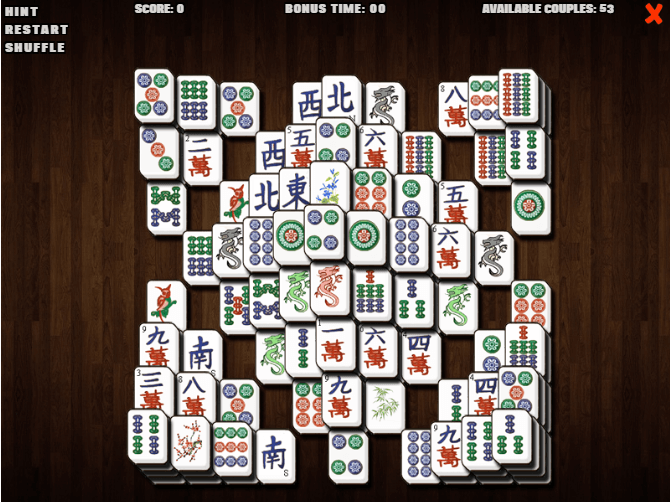
Classic: the stacked layout
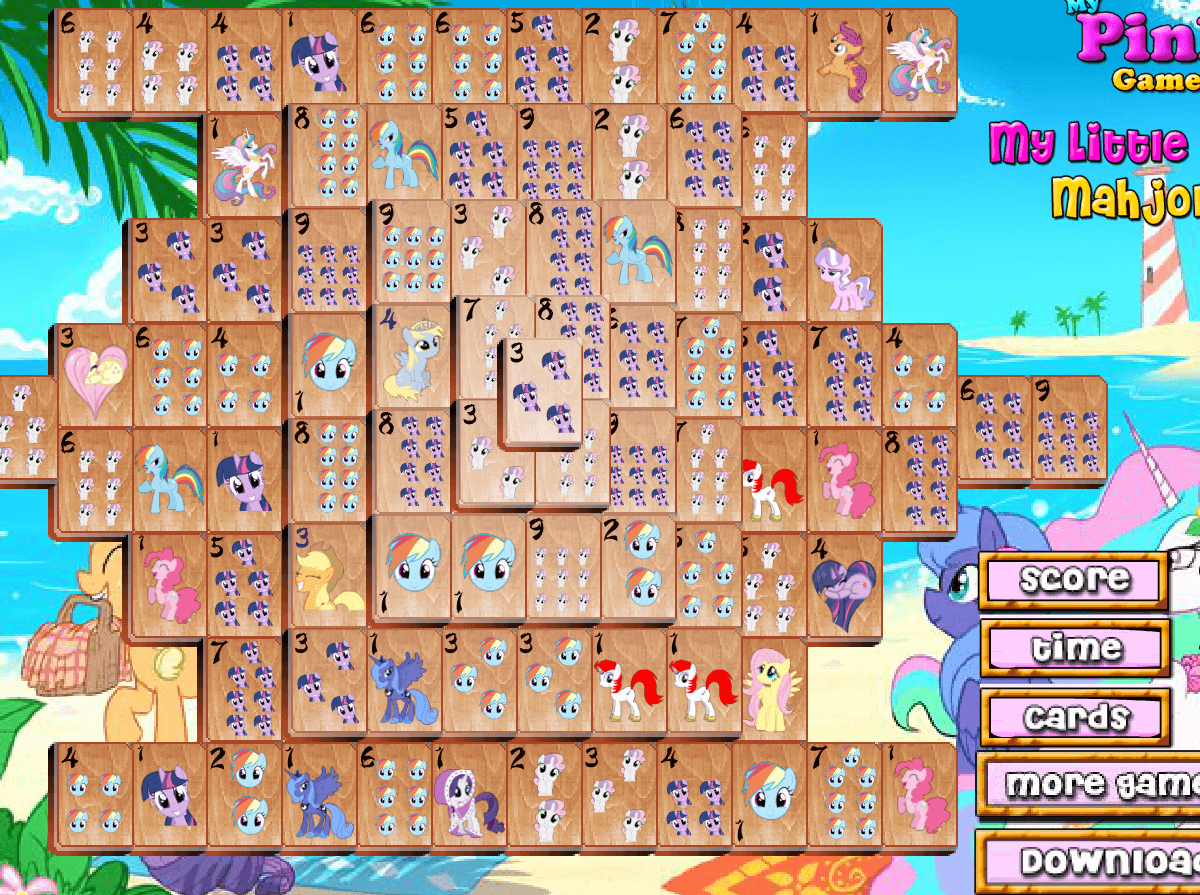
The classic board takes all 144 tiles and piles them into a shape several layers deep, the turtle being the oldest and still the most common. You clear it two tiles at a time, and the whole skill of the format lives in one restriction: a tile is only available when nothing is stacked on top of it and either its left or its right long side is clear of neighbours.
That restriction produces the three situations that trip up new players. A tile pinned between neighbours on both sides is locked even though you can see it perfectly. A tile with another tile resting on it is locked even if the overlap is only partial. And a tile in the middle of a row is locked until the row is eaten from one end. Flowers and seasons are the exception to exactness: many boards let any flower go with any other flower and any season with any other season, so a pair can look mismatched and still be legal.
Time pressure is not part of the classic definition, but plenty of published boards add it anyway, and the ones that do tend to be brutal about it. The classic layouts section holds both kinds, and the standard turtle sits on the plain solitaire board if you want the format without a theme on top.
Connect: one layer, two corners
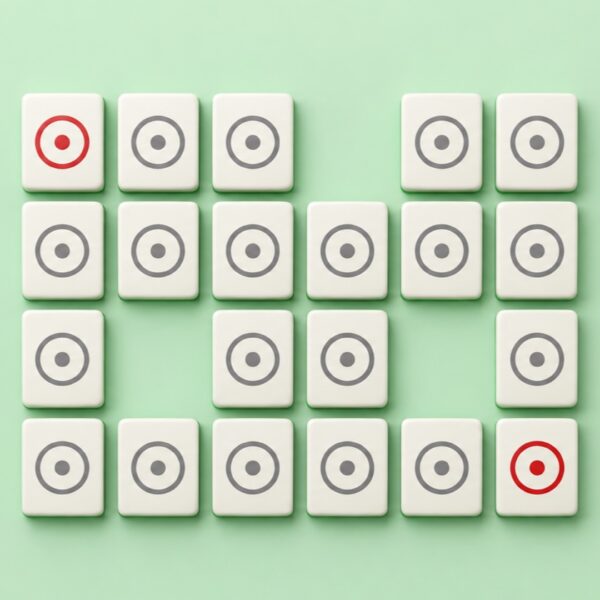
Connect boards throw the stacking away. Every tile sits in a single flat grid, and two identical faces clear when a path can be traced between them that turns no more than twice and passes only over empty squares or around the outside edge of the grid.
Read that rule slowly, because it is the source of the most common complaint about the format. Two matching tiles can be in plain sight, even in the same row, and still be unjoinable: if the space between them is occupied and every detour needs a third turn, the pair is dead for now. As the grid empties, lanes open and pairs that were impossible become trivial. That is why a connect board feels like it gets easier towards the end while a classic board feels like it gets harder.
Nearly all connect boards run against a clock, level by level, which is what makes them the format of choice for a short sitting. The connect section collects them under all their names, and the plain link board is a good place to test whether the two-turn rule has clicked. The onet explainer goes into where those names came from.
Dimensions: the cube you rotate
Dimensions boards, sometimes called cubes, are the newest of the three. The tiles are built into a solid block, only the outer faces can be reached, and you turn the whole thing with the keyboard or by dragging to look at the sides you cannot currently see. The pairing rule is the classic one; the difficulty is spatial rather than combinatorial.
Every board in this family is timed, and the timer is the point. Matching quickly usually earns bonus seconds, so a fast run extends itself and a slow one strangles. Special tiles that add time appear on most boards, and they expire, which means the reasonable strategy is to clear what is visible rather than to hunt for the perfect pair on the far face.
The dimensions section holds them, and the dark-backdrop cube is the one most people arrive looking for. Full screen matters more here than in the other two formats, since the cube loses depth cues in a small frame.
Choosing between them
Pick by the time you actually have. A connect level fits into two or three minutes and ends cleanly, which suits a break. A dimensions run is fixed by its clock and asks for full attention for as long as it lasts. A classic layout has no natural end point short of clearing it, so it expands to fill an evening, and it is the only one of the three where sitting and thinking for thirty seconds is the correct move rather than a wasted one.
Pick also by the kind of failure you can tolerate. A classic board can be lost quietly, twenty moves before you notice, because the pair you took early sealed something you needed later. A connect board is never lost that way: if no move exists, the board reshuffles or the level restarts. If losing without warning irritates you, the flat grid is the friendlier format.
Where seasonal and themed boards fit
Holiday editions are not a fourth type. A Christmas board is a classic layout with wrapped gifts on the faces, or a connect grid with snowflakes, and it plays exactly like its parent format. The same is true of the fruit, animal and kitchen themes. If a themed board feels different, look for a timer or a level structure that has been added on top rather than for a new rule. The winter connect board is a straightforward example: seasonal artwork, two-turn rule underneath.
Once you can name which of the three a board belongs to within a few seconds of it loading, the catalogue stops being a wall of thumbnails. The full map of Mahjong types adds the four-player table schools to this picture, and the head-to-head comparison settles the two formats people switch between most.